Leak Detection in Tustin, CA
Found before anything is opened. Water bills that climbed with no explanation, damp with no source, pressure that has quietly dropped. Serving 92780, 92782 and unincorporated North Tustin in 92705.
Leak detection locates a hidden leak before any wall, slab or hardscape is opened, using meter isolation, pressure testing, acoustic listening and thermal imaging. In Tustin it typically costs $375 to $750 and is often credited against the repair. Call (949) 620-1945 and you are connected with a licensed C-36 contractor.
Four free tests to run before you pay anyone
Every one of these costs nothing, takes minutes, and either narrows the problem or rules out something expensive. Do them first and you will either save the call out entirely or arrive at it with useful information.
1. The meter test
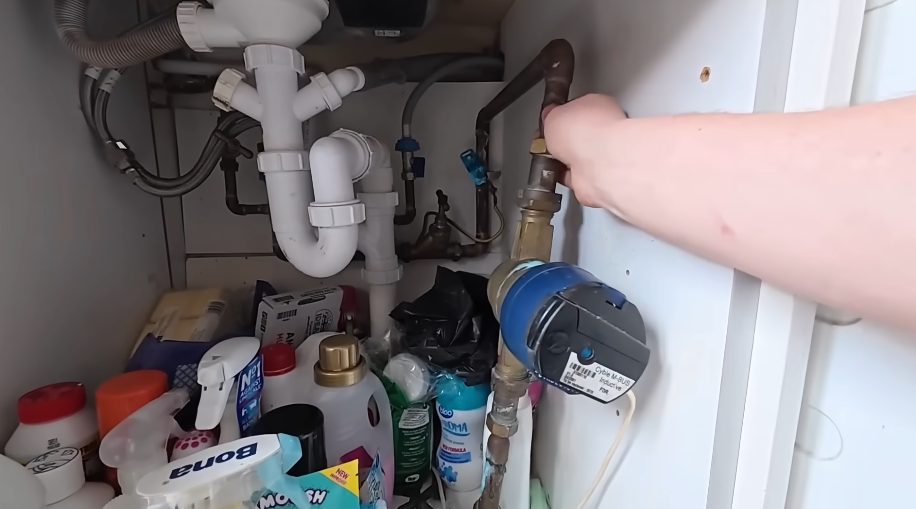
Turn off every fixture and appliance that uses water. Find your meter, normally in a box near the street at the front of the property, and note the reading or watch the low flow indicator, which is usually a small triangle or dial that spins on any flow at all. Wait twenty minutes without using water. If it has moved, you are losing water somewhere.
Photograph the dial at the start and again at the end. That gives you evidence rather than a memory, and it is the first thing a competent contractor will ask about.
2. The main shutoff test, which tells you where
Now close the main shutoff valve to the house and repeat the twenty minute watch. This splits the problem in half. If the meter still moves with the house isolated, the loss is between the meter and that valve, meaning your service line or under the slab. If it stops, the leak is inside the house or in your irrigation downstream of the valve.
3. The toilet dye test
Put a few drops of food colouring in each toilet tank and leave it thirty minutes without flushing. Colour appearing in the bowl means the flapper is passing water continuously. A failed flapper wastes a genuinely startling volume, produces the sound of running water at night, and shows up as a step change in your bill. It is the single most common cause of a mysteriously high water bill and the cheapest to fix.
4. The pressure test
Screw a pressure gauge onto an outside hose bib, available for a few dollars, and read it with nothing running. Above 80 PSI, the California Plumbing Code requires a pressure regulator. High pressure produces leaks at multiple fixtures at once, a weeping water heater relief valve and shortened appliance life. People replace fixture after fixture without ever measuring the thing causing it.
If the meter is still and every toilet passes the dye test, you very likely do not have a plumbing leak. Look at irrigation, the water heater pan, a condensate line or the pool before anyone bills you for detection.
What a hidden leak looks like from inside the house
Hidden leaks announce themselves indirectly. These are the symptoms worth acting on, and what each one usually points at.
- A bill that stepped up rather than spiked. Compare the same month last year, not last month, because irrigation seasonality will mislead you. A continuous leak produces a new baseline. A one month spike is usually a filling pool, a guest, or a stuck sprinkler valve.
- Running water audible at night with everything off. Points to a pressurised supply leak rather than a drain leak. Drains only leak while something is draining, which is why drain leaks show up as intermittent stains rather than continuous sound.
- A warm patch on the floor. A hot side slab leak. Cold side leaks give a cool damp patch instead, which is far easier to miss.
- Pressure that has dropped gradually across the whole house. Either scale narrowing the lines, which is common at 13 to 19 grains per gallon, or a leak bleeding pressure off the run. One fixture losing pressure is a fixture problem. The whole house is a system problem.
- A stain that grows only sometimes. Almost always a drain, waste or vent leak rather than supply. Note whether it worsens after a shower or a laundry cycle, because that timing is the diagnosis.
- Damp at the base of an exterior wall. Could be the service line between meter and house, an irrigation lateral, or a hose bib leaking behind the siding. All three are common in the post war Tustin tracts.
- Mould or a musty smell with no visible water. The late stage sign, meaning water has been present long enough to wick into framing.
How a leak actually gets located
The point of detection is to avoid opening the wrong thing. Concrete, tile and hardscape cut in the wrong place costs you the cut, the repair, the patch and the finish, and the leak is still there.
Isolation and pressure testing
The system is split into sections and each is pressurised and monitored. This confirms a leak exists, establishes hot side or cold side, and narrows it to a zone. Cheapest step, and it should always be first.
Narrows it to a zoneAcoustic listening
Ground microphones and amplified probes pick up the sound of water escaping under pressure through slab, soil or wall cavity. In practised hands this puts a supply leak within a foot or two. It is the primary locating method.
Puts it within a foot or twoThermal imaging
An infrared camera reads the temperature difference a leak creates on a surface. Strong on hot lines and on water spreading behind drywall, weaker on cold lines, and confusable by sun on a slab or by underfloor heating.
Strong on hot sideTracer gas
An inert gas is introduced into the isolated line and detected where it surfaces. Slower, used when acoustic results are ambiguous, the slab is thick and heavily reinforced, or the leak is very small.
For ambiguous resultsVideo camera inspection
For drain, waste and sewer leaks rather than supply. A camera down the line shows roots, cracks, offset joints and bellies, and it is the only way to know which of those you actually have.
Drains and sewersMoisture metering
Pin and pinless meters map how far moisture has travelled through drywall, plaster and subfloor. This defines the repair area and matters for an insurance claim as much as for the plumbing.
Defines the damage areaAsk for the located point marked and photographed before anything is opened. If someone wants to start cutting on the strength of a damp patch and a hunch, that is the moment for a second opinion.
What leak detection costs in Tustin
Published ranges, so you have a reference before anyone quotes you.
| Item | Typical range | What to ask |
|---|---|---|
| Leak detection and location | $375 to $750 | Is it credited against the repair if I proceed? Often yes. Confirm before you book. |
| Service call or minimum fee | $50 to $200 | Usually covers the first hour, and may be separate from or included in the detection fee. |
| Standard hourly rate | $45 to $200 per hour | Orange County labour sits in the upper half of that national range. |
| After hours detection | 1.5 to 3 times standard | Detection is rarely urgent. If water is not actively causing damage, book it in normal hours and save the premium. |
| Video camera inspection | $250 to $500 | Ask for a copy of the footage. It is your evidence for insurance, for a seller, and for a second opinion. |
These are typical ranges, not a quote for your job. Repair cost is a separate question entirely and depends on what gets found. You get a written itemised estimate after location and before work begins. California caps a home improvement deposit at $1,000 or 10 percent of the contract, whichever is less, and gives you three business days to cancel, five if you are 65 or older.
Where Tustin leaks tend to be
Local conditions concentrate leaks in predictable places. Water hardness commonly runs 13 to 19 grains per gallon here, drawn from nine wells in the Orange County Groundwater Basin blended with imported Metropolitan Water District supply, and anything above 10.5 is classified very hard.
| Area | Built | Where the leak usually is |
|---|---|---|
| Old Town Tustin 92780 | 1880s to 1930s | Galvanised supply corroding from the inside, and cast iron drain and vent lines cracking. Leaks appear in wall cavities and under raised floors rather than in slab. |
| Red Hill corridor and Broadmoor 92780 | 1950 to 1975 | Under the slab. Copper in slab on grade, now fifty to seventy five years old, failing as pinholes at elbows. |
| Tustin Ranch 92782 | 1980s to 1990s | First generation copper, and recirculating hot water loops which run continuously and therefore corrode faster than a standard hot line. Polybutylene in a subset of earlier builds. |
| Tustin Legacy 92782 | 2010s to 2020s | Fittings rather than pipe runs. Builder defect angle stops and braided supply lines, and shared stacks in higher density buildings. Often still inside a warranty window. |
| North Tustin, Cowan Heights, Lemon Heights 92705 | 1950s to 1970s plus infill | Long service and irrigation runs across large hillside lots, and pressure variation driven by elevation. Permits go to the County. |
Six things that mimic a plumbing leak
Rule these out before authorising detection. Every one produces a classic leak symptom, and every one is cheaper.
- Irrigation. Tustin irrigation runs hard from late spring through October. A failed valve or cracked lateral raises the bill and soaks soil beside the foundation, and it will not move the meter with the main to the house closed.
- A toilet flapper. The most common cause of a high bill full stop. Thirty seconds and some food colouring settles it.
- A weeping water heater relief valve. Continuous drip into a pan or onto a garage floor, and usually a symptom of pressure over 80 PSI rather than a failing heater.
- Air conditioning condensate. A blocked or disconnected condensate line produces damp near an air handler or a wet patch on a ceiling, and it only appears when the system is running.
- A failed pressure regulator. Above 80 PSI you get leaks at several fixtures at once. Measuring costs a few dollars and it explains a pattern people otherwise chase fixture by fixture.
- Roof, window or stucco intrusion. Appears after rain, not continuously. From November to March, atmospheric river storms make this considerably more likely than a coincidental pipe failure.
A contractor worth using will run these out loud with you before charging for detection, and will say so when the answer is a $12 flapper. That is the standard, and it is why we only refer C-36 licensed, bonded and insured contractors who diagnose before they quote.
Insurance, permits and documentation
Why the detection report matters for a claim
California homeowners policies generally cover sudden and accidental water damage, including accessing the leak and repairing resulting damage to floors, walls and contents. They typically exclude the pipe itself and damage attributed to gradual deterioration or corrosion. Terms vary substantially between carriers, so read your own policy.
The practical consequence is that documentation decides claims. Photograph everything before cleanup. Get the detection report, the located point and the moisture mapping in writing. A documented discovery date is what separates a covered sudden event from an excluded gradual one in the eyes of an adjuster.
Permits
Detection itself needs no permit. The repair often does, and the 2025 California Plumbing Code took effect on 1 January 2026. Replacing or rerouting pipe is permitted work, while clearing a stoppage is not.
City of Tustin Building Division
Submittals go through the Citizen Self Service portal. The permit counter is on 714-573-3130. Plan checks not handled at the counter are generally returned within 10 working days on a first submittal and 5 on a resubmittal.
County of Orange
North Tustin, Cowan Heights, Lemon Heights and Panorama Heights are unincorporated, so permits are filed with the County rather than the City. Only a licensed contractor can pull one.
Verify the licence before work begins
Free, about two minutes. Your assigned contractor’s C-36 number appears on your written estimate so you can check it before agreeing to anything.
- Go to cslb.ca.gov and use the licence lookup. Search by licence number, business name or personal name.
- Confirm the classification is C-36. That is the plumbing contractor classification. A general B licence is not the same thing.
- Check the status is active and the expiration date has not passed.
- Check bond and workers compensation on the same record. Licensed, bonded and insured are three separate protections and a company can hold one without the others.
- Read the complaint and disciplinary history shown on the record.
California requires licensed contractors to publish their licence number in every advertisement soliciting work, under Business and Professions Code section 7030.5. Several plumbing companies ranking for Tustin searches show no licence number anywhere on their websites. Under section 7027.1, advertising for construction work without holding a licence in the classification advertised is a criminal misdemeanor in this state.
Leak detection questions
How do I find a water leak myself?
Turn everything off and watch your water meter for twenty minutes. If it moves, you are losing water. Then close the main shutoff to the house and watch again. Still moving means the loss is between the meter and that valve, so the service line or under the slab. Stopped means it is inside the house or in irrigation downstream of the valve. Then dye test every toilet and put a gauge on a hose bib to check pressure.
How much does leak detection cost in Tustin?
Typically $375 to $750, and it is often credited against the repair if you proceed. Ask whether it is before you book. Video camera inspection for a drain or sewer leak generally runs $250 to $500. These are published ranges, not quotes.
Why is my water bill so high with no visible leak?
In order of likelihood: a toilet flapper passing water continuously, an irrigation valve or lateral, a slab leak, a service line leak between the meter and the house, or a pool losing more than evaporation accounts for. The meter test and the toilet dye test between them rule out most of that list for free.
Can you find a leak without breaking anything?
Locating one, yes. That is the entire point of detection. Acoustic listening, thermal imaging, pressure isolation and tracer gas are all non destructive. Repairing it may require opening a wall, a slab or hardscape, but detection is what ensures the opening happens in the right place and once.
Is leak detection worth paying for or should I just get the repair?
Pay for the detection. A repair quoted without location is a guess, and a wrong opening costs you the cut, the repair, the patch and the finish while the leak continues. The detection fee is small relative to that, and it is frequently credited against the work.
Does homeowners insurance cover leak detection?
Often the cost of accessing and locating the leak is covered where the event qualifies as sudden and accidental, even when the pipe itself is excluded. This varies by carrier and policy. Ask your insurer before you commission the work, and keep the detection report either way because it is the documentation the claim turns on.
What is a normal water pressure for a Tustin house?
Somewhere in the 40 to 80 PSI band is normal and comfortable. Above 80 PSI the California Plumbing Code requires a pressure regulator, and high pressure is one of the most under diagnosed causes of repeated fixture leaks. A gauge on a hose bib costs a few dollars and answers it in two minutes.
How long does leak detection take?
Most residential jobs are one to three hours. Pressure isolation and acoustic work are relatively quick. Tracer gas takes longer, and a difficult slab leak on a thick reinforced pour can run most of a day.
Should I call a plumber or my water provider?
Anything from the meter into your house is yours. A problem at or before the meter, or in the street, belongs to your water provider. In 92780 and 92782 that is Tustin Water Services or the Irvine Ranch Water District depending on your street. In North Tustin it may be East Orange County Water District, Golden State Water Company or Tustin Water Services. A contractor can tell you which side of the meter the problem is on before anyone bills you.
Do I need a permit for leak repair in Tustin?
Detection needs no permit. Replacing or rerouting pipe generally does. Addresses in 92780 and 92782 permit through the City of Tustin Building Division, and unincorporated North Tustin addresses in 92705 permit through the County of Orange. Only a licensed contractor can pull it.
Losing water and cannot find it?
Run the meter test and the toilet dye test first, then call with the results. You will get a straight answer about whether it needs detection or whether it is one of the cheaper things it is usually mistaken for.
Referral service disclosure. Tustin CA Plumber is a local plumbing referral and information service. We are not a licensed plumbing contractor and we do not perform plumbing work ourselves. Nothing on this page is an offer to perform work or a quotation. All plumbing work is carried out by independent contractors licensed by the California Contractors State License Board in classification C-36, operating under their own licence, bond and insurance. Your assigned contractor is responsible for providing their CSLB licence number on your written estimate and invoice, and you should verify it at cslb.ca.gov before work begins.
Code, permit and utility information on this page was last reviewed September 2026 and is general guidance, not legal, insurance or engineering advice, and not a substitute for confirming requirements for your specific property with the City of Tustin Building Division, the County of Orange, your water provider or your insurer. Prices shown are typical ranges drawn from published cost research, not quotes. Every job is priced in writing after inspection.