Angle Stop and Shutoff Valve Replacement in Tustin, CA
The valve you only need once, on the day it will not turn. One of the most common paid repairs in this city. 92780, 92782 and North Tustin 92705.
An angle stop is the small shutoff valve under a sink or behind a toilet. At 13 to 19 grains per gallon, Tustin water calcifies them until the handle will not turn, which people discover mid leak. Replacement typically runs $165 to $325 for the first valve and less for each additional one done on the same visit.
Why this small part matters more than it looks
Nobody thinks about angle stops until the moment they need one, and that moment is always a bad one.
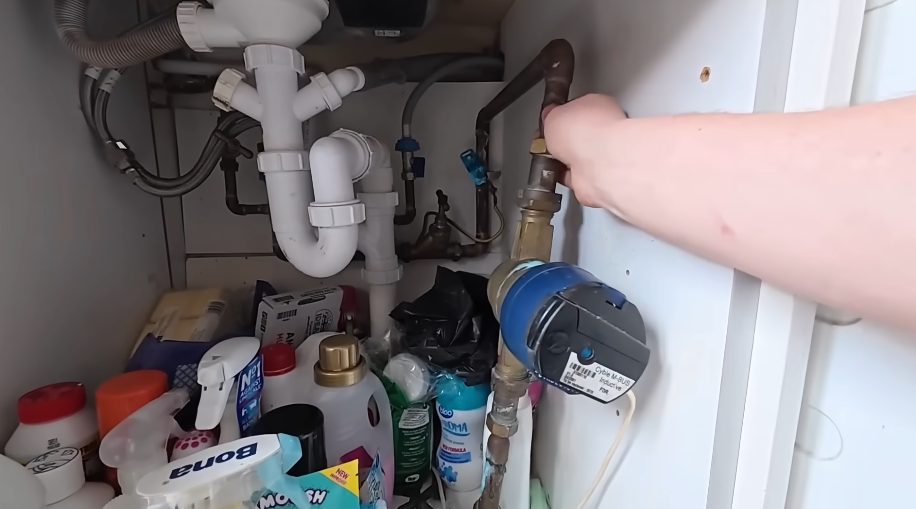
Your main shutoff stops water to the whole house. An angle stop stops water to one fixture, which is what you actually want when a supply line under the kitchen sink starts weeping or a toilet fill valve fails. If the angle stop turns, you isolate the problem in ten seconds and deal with it calmly. If it does not, you are running for the main valve while water spreads across a floor.
The failure mode is not dramatic. It is a valve that has sat untouched for fifteen years while mineral deposits built up inside the body and around the stem. When you finally turn it, one of three things happens: nothing moves, the handle snaps off, or the stem seal gives up and it starts leaking from the valve itself. All three turn a small problem into a bigger one.
What people report
Across the plumbing companies serving Tustin, replacing shutoff valves and faucet stems shows up repeatedly in customer accounts of work done, often several valves at once. That pattern is worth reading correctly: it is not a coincidence, it is what very hard water does to this specific component over time, and it is why doing them proactively costs less than doing them reactively.
If you have never turned the valves under your sinks, go and try them this weekend. Gently. A valve that moves is fine. A valve that does not is a repair you get to schedule rather than one that schedules you.
The hard water mechanism
This is the causal chain, and no other Tustin plumbing site puts the number on it.
Tustin Water Services draws most of its supply from nine active wells tapping the Orange County Groundwater Basin, blended with imported water from the Metropolitan Water District. Hardness commonly runs 13 to 19 grains per gallon, where anything above 10.5 is classified very hard by the Water Quality Association. Older parts of town, including the streets around Old Town and the established lots along Newport Avenue, tend to sit at the top of that range.
Calcium and magnesium precipitate out of the water and deposit on every surface they touch. In a valve that never moves, deposits build in the seat, around the stem and on the threads. The valve does not corrode so much as it cements itself. That is why the failure is so consistent here and comparatively rare in soft water regions.
The same mechanism, other components
- Faucet cartridges and stems. Stiff, then dripping, then seized. The same deposits in a moving part.
- Hose bibs. Outdoor taps that go stiff and eventually will not close fully.
- Toilet fill valves. Deposits on the seal surface mean the valve never quite shuts, which is the running toilet nobody can hear.
- Water heater relief valves. Deposits on the seat, then weeping.
- Shower and tub valves. Temperature drifting, then sticking.
A whole house softener is the only measure that addresses the cause rather than replacing the parts repeatedly. If you are on your second or third round of fixture repairs, that arithmetic is worth doing.
What gets fitted, and what to ask for
Quarter turn ball valve
The modern standard and what you want. A ninety degree turn from open to closed, with a ball rather than a compression stem, which means far less to seize. Ask for these rather than accepting like for like on an old multi turn valve.
Ask for theseThe older design with a rubber washer on a threaded stem. Several turns to close and considerably more prone to seizing and to failing at the stem in hard water. If your existing valves are these, that is why they do not turn.
What is probably there nowBraided stainless supply lines
The flexible line between the valve and the fixture. Old plastic or chrome plated ones become brittle, and a failed supply line under pressure is a common cause of significant water damage. Replace them with the valve, not later.
Replace at the same timeCompression versus soldered connections
Which is appropriate depends on the existing pipe. What matters is that transitions are done with correct fittings rather than improvised, particularly where old galvanised meets modern copper or PEX in Old Town and post war stock.
Correct fittings at transitionsDo all of them at once. The labour is largely in getting a plumber to the house, so the marginal cost of the fifth valve is much lower than the first. A house with eight fixtures done in one visit is dramatically cheaper per valve than eight separate emergencies.
What replacement costs
| Work | Typical range | Notes |
|---|---|---|
| Angle stop or supply line, first valve | $165 to $325 | Includes the service call component, which is why the first is the dearest. |
| Each additional valve, same visit | $85 to $180 | The reason to do them all at once. |
| Whole house, typical eight to twelve valves | $900 to $2,200 | Ask for this priced as a package rather than per valve. |
| Main shutoff valve replacement | $350 to $900 | More involved because the water has to be off at the meter. Worth doing if yours will not turn. |
| Hose bib replacement | $180 to $450 | Depends on whether it is a simple thread or needs wall access. |
| Whole house softener, for context | $1,800 to $4,500 | Addresses the cause. Worth pricing if this is a recurring expense. |
Typical ranges, not a quote. This is one of the few categories where a package price for the whole house genuinely beats doing them as they fail, both on cost and on avoided water damage. You get a written itemised estimate before work starts.
Permits
Replacing a fixture shutoff valve is minor repair work and generally does not require a permit under the 2025 California Plumbing Code. Replacing or relocating pipe does. If a valve replacement turns into a section of new supply line, which happens on old galvanised, confirm the scope.
City of Tustin Building Division
Submittals go through the Citizen Self Service portal. The permit counter is on 714-573-3130. Plan checks not handled at the counter are generally returned within 10 working days on a first submittal and 5 on a resubmittal.
County of Orange
North Tustin, Cowan Heights, Lemon Heights and Panorama Heights are unincorporated, so permits are filed with the County rather than the City. Only a licensed contractor can pull one.
Verify the licence
California requires the licence number to be published in advertising. It takes two minutes to check.
- Go to cslb.ca.gov and use the licence lookup. Search by licence number, business name or personal name.
- Confirm the classification is C-36. That is the plumbing contractor classification. A general B licence is not the same thing.
- Check the status is active and the expiration date has not passed.
- Check bond and workers compensation on the same record. Licensed, bonded and insured are three separate protections and a company can hold one without the others.
- Read the complaint and disciplinary history shown on the record.
California requires licensed contractors to publish their licence number in every advertisement soliciting work, under Business and Professions Code section 7030.5. Several plumbing companies ranking for Tustin searches show no licence number anywhere on their websites. Under section 7027.1, advertising for construction work without holding a licence in the classification advertised is a criminal misdemeanor in this state.
Angle stop questions
Why will my shutoff valve under the sink not turn?
Hard water. At 13 to 19 grains per gallon, calcium and magnesium deposit inside the valve body, around the stem and on the seat until the valve effectively cements itself. It is one of the most common repairs in Tustin, and it is worth replacing them on your own schedule rather than discovering it during a leak.
Should I force a stuck angle stop?
No. Forcing one commonly snaps the handle, shears the stem, or breaks the stem seal so the valve itself starts leaking, which turns a small problem into a bigger one at the worst moment. If it does not move with reasonable effort, shut the main instead and get the valve replaced.
How much does it cost to replace an angle stop in Tustin?
Typically $165 to $325 for the first valve, because that includes the service call component, and $85 to $180 for each additional valve on the same visit. A whole house of eight to twelve valves generally runs $900 to $2,200 as a package. These are published ranges, not quotes.
Should I replace all of them at once?
Usually yes. The labour is mostly in getting a plumber to the house, so the marginal cost of each additional valve is much lower. Given that hard water affects every valve in the house equally, replacing them as a batch costs considerably less than eight separate call outs, and it removes the risk of finding a seized valve mid leak.
What is a quarter turn angle stop and is it better?
Yes, and it is what you should ask for. A quarter turn valve uses a ball rather than a threaded compression stem, so there is far less for mineral deposits to seize. The older multi turn compression stops are what most Tustin houses have and they are the ones that fail. Do not accept like for like replacement on an old design.
Should the supply lines be replaced too?
Yes, at the same time. The flexible line between valve and fixture becomes brittle with age, and a supply line failing under pressure is a common source of major water damage. Braided stainless is the standard, and replacing it while the valve is off costs almost nothing extra.
My main shutoff will not turn either. Is that the same problem?
Same cause, bigger consequence. A seized main valve turns a manageable burst into a flooded house because there is nothing else to close. Replacement runs $350 to $900 and requires the water off at the meter. If yours does not move, this is worth doing before you need it rather than after.
Will a water softener stop this happening?
It addresses the cause. Softening removes the calcium and magnesium that deposit inside the valve, and it protects faucet cartridges, hose bibs, toilet fill valves, the water heater and the tankless heat exchanger at the same time. If fixture repairs have become a recurring expense, price a softener against the next few years of them.
Valves that will not turn?
Try them gently this weekend and note which ones fail. Then call and get them priced as a package rather than one emergency at a time.
Referral service disclosure. Tustin CA Plumber is a local plumbing referral and information service. We are not a licensed plumbing contractor and we do not perform plumbing work ourselves. Nothing on this page is an offer to perform work or a quotation. All plumbing work is carried out by independent contractors licensed by the California Contractors State License Board in classification C-36, operating under their own licence, bond and insurance. Your assigned contractor is responsible for providing their CSLB licence number on your written estimate and invoice, and you should verify it at cslb.ca.gov before work begins.
Code, permit and utility information on this page was last reviewed September 2026 and is general guidance, not legal, insurance or engineering advice, and not a substitute for confirming requirements for your specific property with the City of Tustin Building Division, the County of Orange, your water provider or your insurer. Prices shown are typical ranges drawn from published cost research, not quotes. Every job is priced in writing after inspection.